Moisture readings and thermal imaging
Worth it whenYou suspect mold anywhere, because moisture is what feeds it and this is where every inspection starts.
Shows youWhere damp is hiding inside walls, floors and ceilings.

A mold inspection shows you exactly where mold is hiding in your Gettysburg home and what's causing it, so you know what you're dealing with before paying for any removal.
If you can smell mold but can't find it, or you just want to know for sure, a mold inspection is the place to start. It's usually the first step before mold remediation in Gettysburg, and it means you only pay to fix what's really there. It matters most in an older Gettysburg house, where a stone wall can be soaking and still look dry.
It's often the first clue to mold behind walls, under flooring or in a damp basement.
These point to moisture getting in, and mold usually isn't far behind.
Water that sat for more than a day or two can leave mold where you can't see it.
An inspection can rule mold in or out, and it's worth mentioning to your doctor too.
A written report means buyer and seller are working from the same facts before closing.
A final check confirms it's really gone before the walls go back up.
A residential mold inspection happens at your home, and all you really need to do is show your inspector where you've noticed problems. Here's what happens while they're there.
Your inspector asks about leaks, floods, smells and past repairs, so the search starts in the right places.
Basements, attics, crawl spaces, under sinks, around windows and behind appliances all get a careful look.
A moisture meter, and often a thermal camera, shows damp inside walls and floors without cutting holes.
If testing is worthwhile, air samples from inside and one from outside, or a swab from any visible growth, go off to an accredited lab.
You'll see where the mold is, what's feeding it, roughly how big the area is and what to do next.
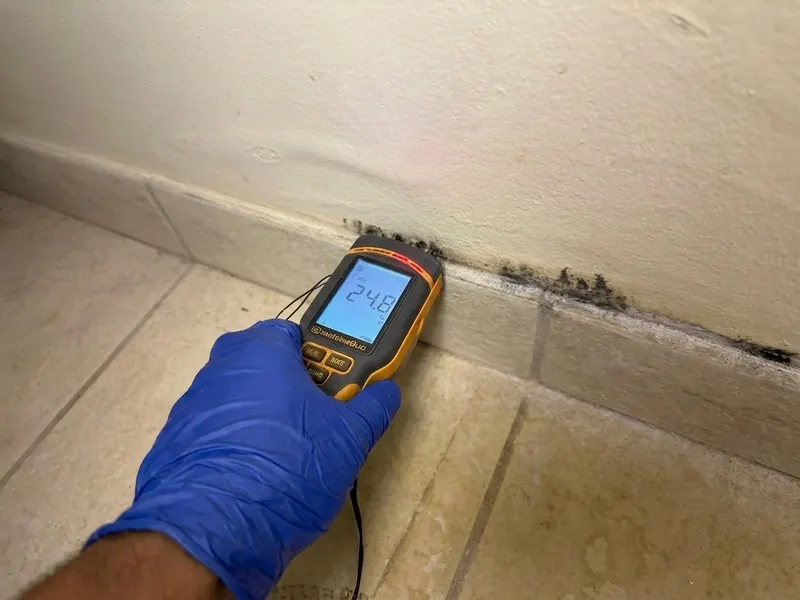
Not every home needs mold testing, and knowing when testing a home for mold is really worth paying for can save you money. EPA guidance says that if you can see mold, sampling usually isn't necessary, because the goal is simply to clean it up and fix the water problem. There are also no federal limits for mold spores, so a test can't tell you your home has passed or failed.
Worth it whenYou suspect mold anywhere, because moisture is what feeds it and this is where every inspection starts.
Shows youWhere damp is hiding inside walls, floors and ceilings.
Worth it whenYou smell mold but can't see it, or someone at home has health concerns.
Shows youWhether spore levels inside are higher than outside, and which types are present.
Worth it whenYou're not sure if a stain is mold, soot or just dirt.
Shows youWhat a patch of growth is, or whether it's mold at all.
Worth it whenMold has just been removed and walls are about to go back up, or you're selling.
Shows youWhether the area is properly clean after remediation.
Home mold testing kits are cheap and easy to find, but they answer the wrong question. Mold spores float in the air of almost every home, so a dish left open on a counter will nearly always grow something, and it can't tell you where the mold is or what's causing it.
A water damage and mold inspection is worth booking after a burst pipe, roof leak or flooded basement, even when everything looks dry. EPA advice is to dry water-damaged areas within 24 to 48 hours, and moisture readings show whether the inside of your walls and floors has dried out. If something's still damp, you'll catch it while it's an easy fix rather than a mold problem, and you'll find what to do next under mold after water damage.
Rule of thumb
24–48 hours
That's how long you have to dry things out before mold can start growing, according to the EPA.
Most mold inspections for a single-family home cost $300 to $700, or about $400 to $800 once lab samples are added, according to RestoreAdvisor's July 2026 figures. And if you're searching for mold inspection and testing near you, there's no need to hunt for a special mobile mold inspection, because every inspection happens at your home anyway.
Typical 2026 mold inspection costs
Each extra lab sample +$25 – $75Ranges from RestoreAdvisor (July 2026). National average from HomeAdvisor (June 2026), where most people paid $303 to $1,045.
National ranges, not a quote. When you compare prices, ask what's included, because some low quotes leave out the samples or the written report. For the cost of fixing the problem, see the mold remediation cost guide.
Our local mold specialist is a mold remediation company, so the same people who inspect your home can also quote to fix it. That's convenient, but if you'd rather have an independent inspector with nothing riding on the result, that's a sensible choice, and you can ask for an inspection only.
Pennsylvania doesn't have a statewide mold law, but mold still comes up whenever a home is sold or rented, and a mold inspection gives you the facts. This is general information, not legal advice.
Under the Real Estate Seller Disclosure Law, sellers must disclose known material defects, and water problems that lead to mold usually count. An inspection before listing lets you fix problems or disclose them clearly.
A report gives you something solid to negotiate with, or a reason to walk away, before closing. Ask the seller in writing about any past leaks or mold work.
No Pennsylvania statute requires landlords to tell tenants about mold, but rentals still have to be kept livable. Report mold to your landlord in writing and keep photos.
There's no Pennsylvania license for mold inspectors or remediators, because the state has no mold regulations at all. Contractors doing $5,000 or more of home improvement work a year must register with the PA Attorney General, so ask for their registration number, and ask about their mold training and experience too. What that means when you're picking a company is covered under choosing a mold company.
If the inspection is for a sale, mold inspection for a home sale covers how buyers and sellers usually split the cost.
A positive mold test isn't a disaster, because almost every home has some mold spores in the air. What matters is whether levels inside are clearly higher than outside, or whether there's active growth and a moisture problem to go with it. If there is, here's what usually happens next.
Mold comes straight back if a leak, poor drainage or damp air is left as it is.
EPA guidance says areas under about 10 square feet can usually be cleaned safely at home.
Depending on where it is, that means black mold removal, basement mold removal or crawl space and attic mold work.
If the mold followed a sudden leak, your policy may help, and our guide to whether insurance covers mold in PA explains when.
A clearance check proves it's gone, which really helps if you're selling.
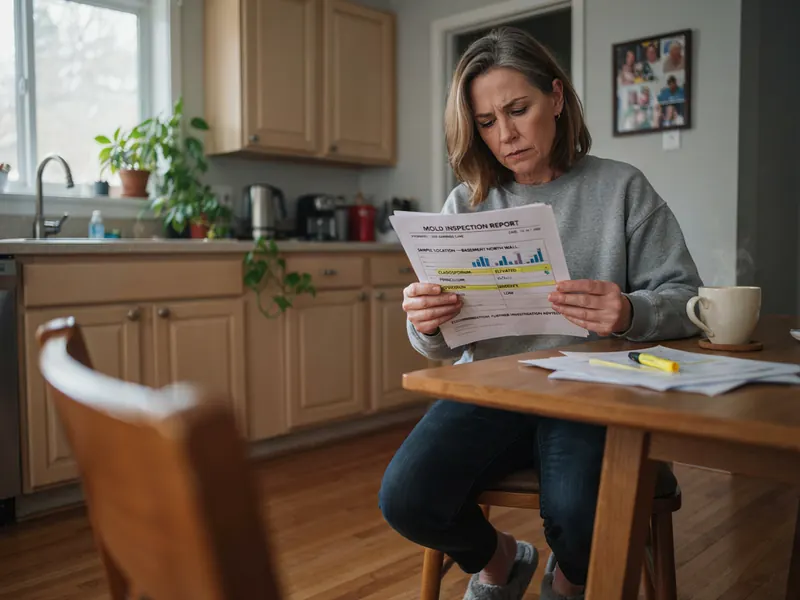
There's no statewide mold law, but sellers must disclose known material defects and landlords have to keep rentals livable. The buying, selling and renting section has more detail, and a PA real estate attorney can help with your own situation.
Tell your landlord in writing, take dated photos and keep copies of everything. An inspection report gives you clear evidence if the problem isn't dealt with, and it's worth checking whether your renters insurance covers damaged belongings, as many policies limit mold claims.
Mold grows fastest whenever humidity stays high, so damp basements and muggy stretches of weather are when it tends to spread. EPA guidance suggests keeping indoor humidity between 30 and 50 percent, and a dehumidifier in the basement helps a lot.
Switch it off until it's been checked, since EPA advice is not to run a system you suspect is contaminated. An inspection shows whether the mold is in the unit, the ducts or just around the vents.
Tell us why you'd like an inspection and how to reach you, and we'll pass it straight to our local mold specialist, who'll get back to you to arrange it and give you a price. Already spotted dark patches spreading? See how black mold removal deals with them, and find every service we cover under mold remediation in Gettysburg.
Call now (223) 747-0678 Mold remediation in Gettysburg and Adams CountySources: EPA, A Brief Guide to Mold, Moisture and Your Home, RestoreAdvisor mold inspection cost (July 2026), Nolo, Pennsylvania rules on mold in rentals (2026), PA Department of Health, Mold and Your Health (Dec 2025), PA Attorney General, home improvement contractor registration, PA Real Estate Seller Disclosure Law, HomeAdvisor mold inspection cost (June 2026).