
Mold After Water Damage in Gettysburg, PA
After a leak or flood, mold can start growing within two days. Our local mold specialist can check your Gettysburg home for mold in walls, floors or carpet and remove it before it spreads.
How Fast Mold Grows After Water Damage
Mold from water damage can start growing within 24 to 48 hours, which is why the first two days matter so much. A burst pipe, an overflowing washer and a flooded basement all start the same clock, and getting things dry in that window gives you the best chance of avoiding mold remediation in Gettysburg altogether.
First 24 hours
Dry it out
Water out, windows open, fans and a dehumidifier running. Most things can still be saved.
24 to 48 hours
Mold can start
Anything still wet, especially carpet pad and drywall, is at risk of mold beginning to grow.
After 48 hours
Assume it's there
Mold is probably growing somewhere, so soft materials that stayed wet need to come out.
What to Do in the First 48 Hours After a Leak or Flood
Knowing how to prevent mold after water damage mostly comes down to moving quickly and in the right order. Here's what to do, step by step.
-
Step 1: Stop the water and stay safe
Turn off the water supply if a pipe has burst, and if there's been flooding, keep out until it's safe, with the electricity off around any standing water.
-
Step 2: Take photos before you clean up
Photograph the damage and your belongings, and call your insurance company before you start moving things, so a claim is easier to back up.
-
Step 3: Get the water out and air moving
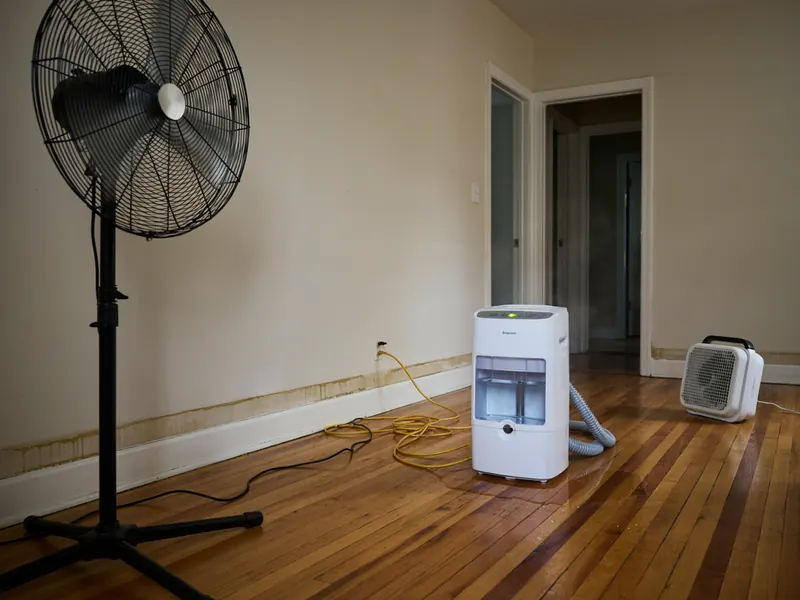
Use a wet vacuum, open windows and set fans to blow air outside, with a dehumidifier running to pull moisture out of the room.
-
Step 4: Pull out what can't be dried
Soaked carpet pad, rugs, cushions and swollen drywall usually need to come out, because anything that can't dry out properly gives mold somewhere to grow.
-
Step 5: Check for mold you can't see
If anything stayed wet for more than two days, mold may already be growing behind walls or under floors, and that's when a proper check is worth it.
Water sat for more than two days?
Tell us what happened and we'll pass it straight to our local mold specialist, who can check behind walls and under floors for mold and give you a price to remove it.
How to Check for Mold After Water Damage
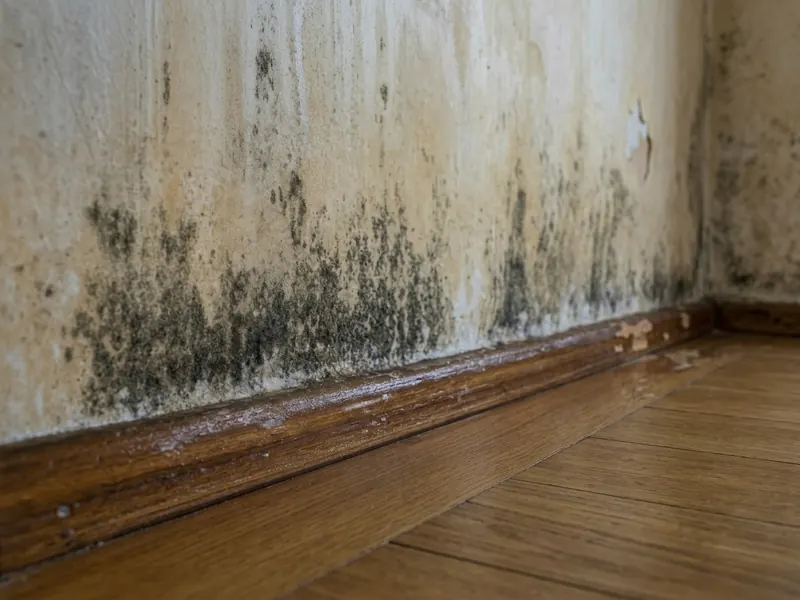
Checking for mold after water damage starts with your nose and eyes, because mold often shows up as a smell or a stain before you see any growth. Look closely at the spots where water sat longest, and at the bottom of walls and around baseboards.
If you notice any of these signs in the days or weeks after the water's gone, mold has probably started somewhere.
A musty smell
Often the first sign, even when there's nothing to see yet.
Spots or stains that spread
Dark or fuzzy patches on walls, ceilings or baseboards near where the water was.
Bubbling paint or peeling wallpaper
Moisture trapped behind the surface gives mold somewhere hidden to grow.
Warped trim or soft spots
Baseboards pulling away or floors that feel spongy mean water has soaked in.
Mold in carpet from water damage
Carpet can sometimes be saved if the carpet and pad are pulled up and dried within 48 hours. After that, the pad underneath usually needs throwing out, and a musty smell that won't go away means mold has likely set in.
Signs of mold under hardwood floors
Boards that cup, buckle or feel soft, dark staining along the seams and a musty smell near the floor all point to moisture trapped underneath. Mold under wood floors is hard to reach from above, so boards often have to be lifted to check and clean underneath.
What to Keep and What to Throw Out After Water Damage
After a leak or flood, hard surfaces can usually be cleaned, but soft materials that stayed wet for more than 48 hours often can't.
Usually worth cleaning
- Tile, concrete, metal and glass
- Countertops, sinks and appliances
- Sealed wood and metal furniture
- Drywall that isn't swollen and still has tight seams
Usually has to go if it stayed wet
- Carpet pad, rugs and upholstered furniture
- Mattresses, pillows and cushions
- Swollen drywall, wet insulation and ceiling tiles
- Paper, books and cardboard boxes
Anything touched by sewage or outside floodwater should be thrown out, including drywall and insulation.
When to Call for Help
Some water damage is more than a mop-and-fans job. If there's still standing water, call a water damage restoration company first to pump it out and dry your home properly. Once things are dry, our local mold specialist can check for mold and remove anything that's started.
It's also time to get help if the water was sewage or floodwater, if things stayed wet for more than two days, if mold covers more than about 10 square feet, or if anyone at home has asthma or breathing problems. If mold has already spread across walls or ceilings, see how black mold removal works.
Rule of thumb
When in doubt, take it out
A good rule for anything soft that stayed wet and can't be cleaned and dried properly.
Mold After Water Damage FAQs
Is mold from water damage harmful?
Mold can cause a stuffy nose, coughing or itchy eyes in anyone, and it's harder on people with asthma, allergies or weak immune systems. It's worth wearing an N95 mask whenever you go into a home that's been flooded.
How long does it take mold to settle in after water damage?
Mold can start within 24 to 48 hours. If your home wasn't dried out in that time, it's safest to assume mold is growing somewhere, even if you can't see it yet.
How likely is mold after water damage?
That mostly comes down to how fast things dry. Materials dried within 24 to 48 hours usually don't grow mold, but carpet, drywall and insulation that stay wet longer very often do.
Does homeowners insurance cover mold from water damage?
Cover is likely when the water came from something sudden, like a burst pipe or an overflowing appliance, but not from slow leaks or outside flooding. Many policies also cap mold payouts, so check how insurance treats mold in PA before you claim.
Get a mold after water damage estimate
Tell us what happened and how to reach you, and we'll pass it straight to our local mold specialist, who'll get back to you about checking for mold and what it'll cost to remove. If the water reached under the house or into the roof, see how crawl space and attic mold is cleared, or find out what mold remediation usually costs.
Call now (223) 747-0678 Mold remediation in Gettysburg and Adams County