
Basement Mold Removal in Gettysburg, PA
When your basement smells musty or the mold keeps coming back, our local mold specialist can clear it and track down where the damp is getting in, so you can use the space again.
Why Mold Keeps Coming Back in Your Basement
Mold in a basement almost always comes down to moisture, and until that's fixed, cleaning it off only buys you a little time. Basements sit below ground and stay cool, so they collect damp from the soil, the air and any leaks above, and older homes with stone or block foundations tend to let ground moisture through more easily, which is its own problem and one we've covered under mold in old Gettysburg homes.
Basements are one of the most common places needing mold remediation in Gettysburg, and these are the usual reasons the mold keeps coming back.
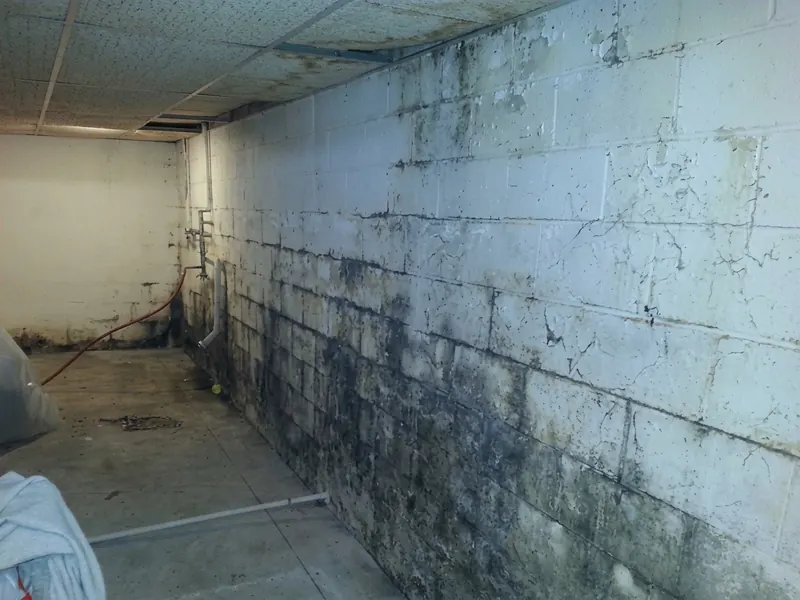
Water seeping through the walls
Rain and groundwater push through foundation walls and cracks, especially after heavy rain or snowmelt. Gettysburg gets 46.5 inches of rain and snow in an average year, and September is the wettest month of the lot, which is why a basement that coped all summer starts showing damp in the fall.
You'll see: damp patches spreading up from the floor, a chalky white line on block or stone, or puddles a day after heavy rain.
The fix: gutters, downspouts and grading outside first, then a perimeter drain and sump if water keeps coming through.
Poor drainage outside
Blocked gutters, short downspouts or ground sloping toward the house send water straight at the foundation.
You'll see: water standing against the wall after a storm, a downspout emptying beside the foundation, or soil that falls toward the house rather than away.
The fix: clear the gutters, extend the downspouts past the foundation and build the ground up so it slopes away.
Humid air meeting cool walls
Warm, muggy air hits cold walls and pipes and turns to condensation, which keeps surfaces damp.
You'll see: damp that arrives in June and clears in October, water beading on pipes and block, or a musty smell with no wet patch to explain it.
The fix: a dehumidifier on a humidistat holding the basement between 30 and 50 percent through the damp months.
Leaks and small floods
A burst pipe, water heater or washing machine leak can soak carpet and drywall in a few hours.
You'll see: one wet spot rather than a wet wall, staining under a bathroom or kitchen, or damp that shows up whatever the weather is doing.
The fix: fix the pipe or fitting, then dry the wall and floor properly before anything goes back against it.
If a leak or flood started it, find out what to dry out and when under mold after water damage.
White Powder on Basement Walls: Mold vs Efflorescence
White powder on a basement wall isn't always mold. Quite often it's efflorescence, which is salt left behind when water soaks through concrete or stone and dries on the surface. A quick way to tell is to mist it with a spray bottle of water.
It's probably efflorescence if it…
- Feels chalky or gritty and brushes off like dust
- Disappears when you spray it with water
- Only shows up on concrete, block, brick or stone
- Has no smell at all
It's probably mold if it…
- Looks fuzzy, cottony or slimy
- Is still there after you spray it
- Grows on wood, drywall, boxes or carpet
- Comes with a musty smell
Efflorescence isn't harmful, but it means water is getting through your walls, and that same moisture is what lets mold grow.
How Basement Mold Removal Works in Gettysburg, PA
Basement mold removal only lasts if the moisture gets fixed as well. Here's what proper basement mold remediation looks like, from finding the moisture to drying the space out.
-
Step 1: Find where the damp is coming from
Moisture readings and a close look at the walls, floor, pipes and outside drainage show whether it's seepage, condensation or a leak.
-
Step 2: Seal off the basement
Plastic sheeting and air filters stop spores drifting up into the rooms above while the work is being done.
-
Step 3: Clear out what's damaged
Moldy carpet, paneling, drywall and stored boxes that can't be cleaned are taken out and bagged.
-
Step 4: Clean walls, joists and floors
Concrete, block and wood framing are physically cleaned rather than just sprayed, so the mold is removed rather than hidden.
-
Step 5: Fix the moisture and dry it out
The drainage, leak or humidity problem gets sorted, with a plumber or waterproofing contractor where the fix needs one, and the space is dried and checked before you use it again.
How to Get Rid of Mold Smell in Your Basement
Getting rid of mold smell in a basement means finding what's growing and drying the space out, because that musty smell comes from mold or mildew somewhere damp. Air fresheners, candles and open windows only cover it up for a while.
Where to start
- Look behind stored boxes, under carpet, around the water heater and along the bottom of the walls.
- Throw out anything soft that smells musty, like cardboard, old rugs or fabric.
- Clean small patches on hard surfaces with detergent and water, following EPA guidance for anything under about 10 square feet.
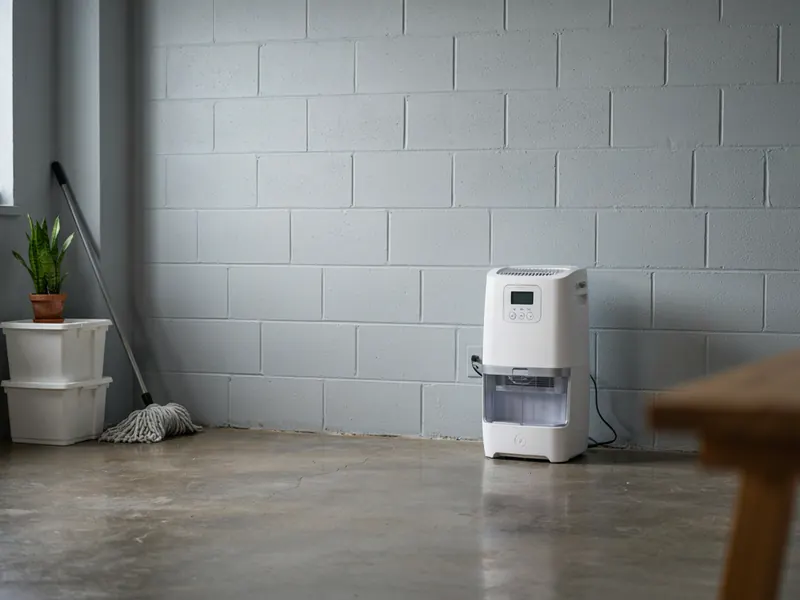
- Run a dehumidifier to bring the humidity down.
- Keep air moving and fix wherever water is getting in.
Still smells musty after cleaning?
Then mold is probably hiding behind paneling, under flooring or inside a wall. A mold inspection can find it without pulling your basement apart to look.
Choosing a Dehumidifier for Mold in Your Basement
A dehumidifier for mold in your basement won't get rid of mold that's already there, but it's one of the best ways to stop it coming back. EPA guidance is to keep indoor humidity below 60 percent, ideally between 30 and 50 percent, and a basement often sits well above that in summer. Pick your basement below to see what size ENERGY STAR suggests.
How big is your basement?
How damp does it feel?
Suggested size
20 – 30 pints a day
Going a size bigger is better than going smaller, according to ENERGY STAR.
If your basement is usually below 65°F, look for a model rated for low temperatures. Capacity ratings have also changed, so an old "70-pint" machine isn't the same as a new one with the same number.
When You Need Basement Waterproofing Too
Basement mold removal clears the mold, but if water is coming through the walls or floor, you may also need a basement waterproofing contractor. That's usually the case if you see puddles after rain, wet patches spreading from cracks, or walls that stay damp even with a dehumidifier running. The moisture readings from a mold inspection can help show whether it needs more than a dehumidifier.
2026 national figures from HomeGuide, not quotes.
Not sure where your basement damp is coming from?
Tell us what you're seeing and we'll pass it straight to our local mold specialist, who can look at the mold and the moisture behind it and give you a price.
Basement Mold Remediation Cost in Gettysburg, PA
Basement mold remediation usually costs $1,500 to $6,000 when part of the basement is affected, and $6,000 to $15,000 or more for the whole space, according to HomeGuide's 2026 figures. Finished basements cost more, because drywall, insulation and carpet often have to come out and be replaced.
Typical 2026 basement mold remediation costs
Replacing drywall +$1.50 – $3.50 per sq ftNational ranges, not a quote. For every room and size, see the mold remediation cost guide.
Basement Mold FAQs
Can you remove basement mold yourself?
Small patches under about 10 square feet on hard surfaces like concrete can usually be cleaned with detergent and water, wearing gloves, goggles and an N-95 mask. Bigger areas, or mold on paneling, carpet or drywall, are better left to a professional.
Can I live in a house with mold in the basement?
Living with basement mold isn't ideal, because basement air rises into the rooms above, so it's worth dealing with sooner rather than later. If anyone at home has asthma or breathing problems, talk to your doctor and get it looked at quickly.
Can mold in the basement affect upstairs?
Basement air does rise into the rooms above, because warm air moving up through a house pulls it along, and a furnace in the basement can spread spores through the ducts. Removing the mold and bringing the basement humidity down stops it reaching the rest of your home.
Will homeowners insurance cover mold in the basement?
Cover usually comes down to the cause. Mold after a sudden burst pipe is more likely to be covered than mold from seepage or long-term damp, which most policies leave out. Read more about when insurance covers mold in PA.
Should I run a dehumidifier all the time?
Most dehumidifiers have a built-in humidistat, so you set a target, ideally between 30 and 50 percent, and it switches on and off by itself. Leaving it plugged in and set that way through the damp months keeps the basement dry without it running nonstop.
Get a basement mold removal estimate
Tell us where the mold is and how to reach you, and we'll pass it straight to our local mold specialist, who'll get back to you about next steps and a price. Mold up in the attic or down in the crawl space as well? See how crawl space and attic mold is cleared, or if the patches are dark and spreading, read about black mold removal.
Call now (223) 747-0678 Mold remediation in Gettysburg and Adams County